
Stone Design Trends 2026: What's Shaping the World of Natural Stone

Natural stone has always occupied a unique position in the world of design — it is ancient and contemporary at once, timeless in its beauty yet entirely responsive to the cultural moment. In 2026, that responsiveness is on full display. The directions emerging across luxury interiors this year reflect a broader shift in how people want to live: with more texture, more warmth, more authenticity, and a deeper connection to the natural world. Stone, as it has for millennia, is rising to meet that desire — and the results are some of the most compelling interior design work we have seen in years.
At The Vero Stone, our position at the intersection of Italian stone craftsmanship and the American luxury market gives us a front-row seat to where these trends are taking shape. Our Italian partners — the designers, engineers, and artisans we have worked alongside for over three decades — are among the people driving these directions at the source, in the quarries and workshops where the stone itself begins its journey. What we are seeing from them, and bringing to our clients across the U.S., is nothing short of extraordinary. Here is what is defining stone design in 2026.
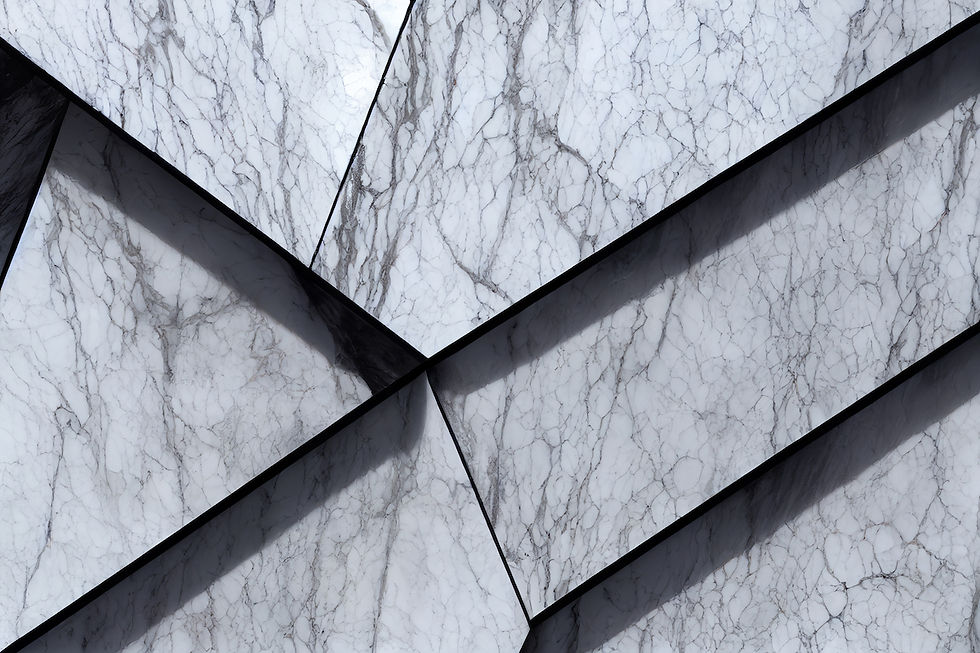
The Stone Varieties Defining Luxury Interiors in 2026
Every year brings shifts in which stones are capturing the imagination of designers and their clients, and 2026 is no exception. What is particularly interesting about this moment is that the movement is not toward a single stone or a single aesthetic — it is toward authenticity, toward materials with genuine character and provenance, and toward stones that could not be mistaken for anything manufactured. In that context, several varieties are standing out with particular force.
Quartzite continues its remarkable ascent as one of the defining stones of contemporary luxury design. What began as a practical alternative to marble — offering similar visual drama with greater durability — has evolved into something more. Designers are now choosing quartzite on its own terms, drawn to its unique veining patterns, its extraordinary range of color, and the way it bridges the natural and the architectural. Varieties like Taj Mahal, with its warm, creamy ground and soft golden movement, and Patagonia, with its dramatic, almost painterly veining, are appearing in some of the most considered interiors being designed right now. Quartzite is no longer a substitute for anything. It is a first choice.
Alongside quartzite, there is a growing and genuine appetite for rarer, less familiar stone varieties — stones that bring something to a project that cannot be found anywhere else. Calacatta Viola, with its striking purple and gold veining on a white ground, is generating significant interest among designers looking for a marble that makes an unmistakable statement. Onyx, long considered too dramatic for widespread use, is finding its place in feature walls, backlit panels, and bathroom applications where its translucency can be fully exploited. Cipollino, Verde Alpi, and other historically significant Italian stones are being rediscovered by a design community that is increasingly drawn to materials with deep roots and rich histories.
That last point connects directly to the influence of Italian sourcing on what is available and desirable in the U.S. market. Italy remains the undisputed center of the stone world — not just for the quality of its marble, but for the depth of knowledge, craft, and design sensibility that surrounds it. As American designers develop more direct relationships with Italian suppliers and makers, the range of what is accessible in this market is expanding significantly. Stones that were once difficult or impossible to source in the U.S. are becoming available to clients who know where to look — and the design possibilities that opens up are considerable.

2026 Stone Finish and Texture Trends: Beyond Polished and Honed
For years, the conversation about natural stone in luxury interiors was dominated by two finish options: polished or honed. Polished for drama and reflectivity, honed for a softer, more matte sophistication. Both remain beautiful and both remain relevant — but in 2026, the finish conversation has expanded significantly, and texture has emerged as one of the most exciting and expressive dimensions of stone design.
Leathered finishes are among the most sought after right now, and it is easy to understand why. The leathering process — in which diamond-tipped brushes work the surface of the stone to close its pores while leaving a subtle, undulating texture — produces a result that is neither matte nor reflective but something altogether more tactile and alive. A leathered quartzite countertop or a leathered marble feature wall has a presence that a polished surface simply does not — it invites touch, it catches light differently at different times of day, and it has a quiet sensuality that resonates deeply with where luxury interiors are heading. Brushed finishes work along similar lines, softening the surface while preserving and even enhancing the natural character of the stone beneath.
Hand-chiseled finishes occupy their own special category — and this is an area where The Vero Stone's Italian partnerships give our clients access to something truly exceptional. Hand chiseling is an ancient technique that produces a surface of extraordinary depth and texture, one that carries the mark of human skill in every square inch. In 2026, as the broader design world moves toward authenticity and craft, hand-chiseled stone is finding its way into interiors that want to make a statement about quality that goes beyond aesthetics. It is not just beautiful — it is evidence of something made by hand, with knowledge passed down through generations.
The embrace of unfilled travertine sits within this same cultural current. For decades, the instinct was to fill travertine's natural voids — to smooth them over and present a more uniform surface. That instinct is giving way to something more confident and more interesting. Designers and clients are increasingly choosing to leave those voids open, to celebrate the texture and the geological narrative they represent rather than conceal it. An unfilled travertine wall or floor is a reminder that the material came from the earth, that it has a history, that it is genuinely and irreducibly natural. In a design landscape increasingly saturated with surfaces that mimic and approximate, that honesty is becoming its own form of luxury.
What all of these finish trends share is a common philosophy: that the surface of a stone should tell the truth about what it is. The move toward texture, toward craft, toward the embrace of natural character and imperfection is not simply an aesthetic preference. It is a reflection of a broader cultural shift toward materials and objects that are real, that are made with skill, and that connect the spaces we inhabit to something larger and more enduring than the moment we are living in.
How Stone Is Being Used Differently in 2026: Bold Applications and Unexpected Spaces
If there is a single theme that cuts across stone design in 2026, it is ambition. Designers and their clients are thinking bigger, more boldly, and more creatively about where stone belongs in a home — and the answers they are arriving at are pushing the material into spaces and applications that would have felt surprising even five years ago.
The most immediate shift is stone's expansion beyond its traditional territory. Countertops and floors remain the foundation of stone design, but they are no longer the ceiling of it. Stone is appearing on ceilings themselves — dramatic marble or travertine overhead in a bathroom or entrance hall, transforming a surface that design has historically ignored into one of the most powerful elements in the room. Stone furniture — dining tables carved from a single slab, coffee tables in bookmatched marble, console tables in sculpted travertine — is moving from the exceptional to the aspirational, as clients recognize that a piece of stone furniture is both a functional object and a work of art that will outlast everything around it. Stone is appearing on kitchen cabinet fronts, on stair risers, on interior doors, and on bathroom ceilings in ways that speak to a design community that has fully internalized what the material is capable of.
The full-room stone concept is one of the most compelling directions of 2026. Rather than introducing stone as an accent or a feature, designers are wrapping entire spaces in a single material — the same marble or travertine running continuously from floor to wall to ceiling, creating an environment of total immersion. A bathroom conceived this way stops being a room with stone in it and becomes something closer to a grotto, a sanctuary, a space that feels carved from the earth rather than constructed within it. The bookmatching opportunities that a full-room concept opens up are extraordinary — continuous veining that flows without interruption across every surface, creating a visual experience that is genuinely unlike anything else in interior design.
Custom carved and sculptural stone elements are also having a significant moment. Stone sinks carved from a single block, sculptural fireplace surrounds that function as architectural installations, bespoke stone basins and bathtubs that anchor a bathroom the way a great painting anchors a gallery — these are the pieces that define a project, that give it a soul and a focal point that no other material can provide. At The Vero Stone, this is work we approach with particular passion, because it represents stone design at its most expressive and its most demanding.
Beyond the interior, outdoor living spaces are claiming an expanding share of the stone design conversation in 2026. The boundaries between inside and outside have been dissolving in luxury home design for years, and stone is one of the materials most naturally suited to that dissolution. Outdoor kitchens with stone countertops and cladding, terraces in bookmatched travertine, garden walls and water features in hand-chiseled limestone — these are applications where stone's durability and its connection to the natural world make it not just appropriate but inevitable. As outdoor living continues to be treated with the same design seriousness as interior spaces, stone is following naturally, bringing everything it offers inside to the world beyond the walls as well.
Color and Pattern Directions in Natural Stone Design for 2026
Color in natural stone design is never truly separate from everything else happening in the broader world of interiors — stone choices both respond to and help define the aesthetic moment. In 2026, that moment is one of warmth, depth, and a willingness to commit to materials and palettes that feel genuinely bold. The directions emerging in stone color and pattern this year are some of the most exciting we have seen, and they are reshaping what clients are drawn to when they walk into a stone yard.
The most significant shift is the move away from the stark, bright whites that dominated luxury interiors for much of the last decade. Calacatta marble with its crisp white ground and bold gray veining remains beautiful, and it is not going anywhere — but it is no longer the default choice for clients who want to make a statement. In its place, warmer and earthier tones are taking center stage. Creamy warms, rich golds, deep ambers, tawny browns, and soft terracottas are appearing across kitchens, bathrooms, and living spaces in ways that feel entirely of the moment. Stones like Giallo Siena, with its rich golden warmth, or Rosso Verona, with its deep burgundy and cream movement, are finding audiences that might previously have defaulted to something cooler and safer. The warmer palette speaks directly to a broader interior design movement toward spaces that feel enveloping, grounded, and deeply human.
Alongside the shift in color, there is a clear and growing appetite for bold veining and dramatic pattern movement. The quiet, understated slab — beautiful in its own right — is sharing the stage with stones whose veining makes an unapologetic visual statement. Dramatic diagonal movement, sweeping waterfall patterns, veining that travels the full length of a slab in bold strokes of color — these are the characteristics that designers and their clients are actively seeking out in 2026. It is a confidence in the material, a willingness to let the stone be the most powerful thing in the room, that feels like a genuine cultural shift rather than a passing fashion.
Bookmatching is the technique through which that drama is most fully realized, and it is being used more ambitiously in 2026 than ever before. The traditional application — two mirrored slabs on a kitchen island or bathroom vanity — is giving way to something far more expansive. Full walls of bookmatched marble in living rooms and primary bedrooms, bookmatched stone wrapping continuously from a floor onto a wall, four-way matched slabs creating mandala-like patterns of extraordinary complexity — these are the applications that are generating the most excitement among designers working at the highest level. When bookmatching is executed with precision and with slabs chosen specifically for the drama of their mirrored pattern, the result is less a design choice and more a natural phenomenon, something that looks as if it could only have come from the earth itself.
The role of stone color in responding to broader interior design trends is worth pausing on, because it illuminates something important about why natural stone endures as a design material above all others. When interiors move toward warmth, stone offers travertine and golden marble. When they move toward drama, stone offers bold veining and deep color. When they move toward texture and craft, stone offers hand-chiseled surfaces and unfilled voids. Stone does not resist the moment — it meets it, on its own terms, with a depth and authenticity that no manufactured material can replicate. That is as true in 2026 as it has ever been.
Bring the Best of 2026 Stone Design to Your Next Project
The threads running through stone design in 2026 — the warmth, the texture, the ambition, the embrace of natural character — all point toward the same underlying truth: that the most compelling interiors are the ones built around materials that are genuinely, irreducibly real. Natural stone has always embodied that quality, and right now, the design world is celebrating it more fully and more creatively than it has in a generation. It is an extraordinary moment to be working with stone.
At The Vero Stone, we are bringing the best of what 2026 has to offer to clients across the United States — through our direct relationships with Italian stone designers, engineers, and artisans who are at the forefront of these directions, and through the depth of knowledge and passion for the material that we bring to every project we touch. Whether you are drawn to the drama of bookmatched marble, the warmth of a hand-chiseled travertine wall, or a sculptural stone element that becomes the soul of a room, we have the expertise, the partnerships, and the enthusiasm to make it happen.
Stone design in 2026 is full of possibility. Let The Vero Stone help you explore it — reach out today and let's start the conversation about what your next project could become.


Comments